
What role do volunteers play in assisted living?
Volunteers help create connection, companionship, and meaningful daily activity in assisted living communities. They may spend time with residents, support recreation programs, assist with special events, or share skills and interests.
Their role is usually different from that of paid staff. Employees are responsible for care, medication support, supervision, documentation, meals, housekeeping, and other operational duties. Volunteers generally supplement those services by contributing time and personal attention.
For residents and families in Ardmore, PA, volunteering can be especially valuable because assisted living is both a residential setting and a social community. A reliable volunteer presence may help residents feel more engaged with the people and activities around them.
What activities can volunteers provide?
Volunteer activities vary according to the community, the volunteer’s abilities, and residents’ interests. Common examples include:
- Reading aloud, discussing newspapers, or listening to personal stories
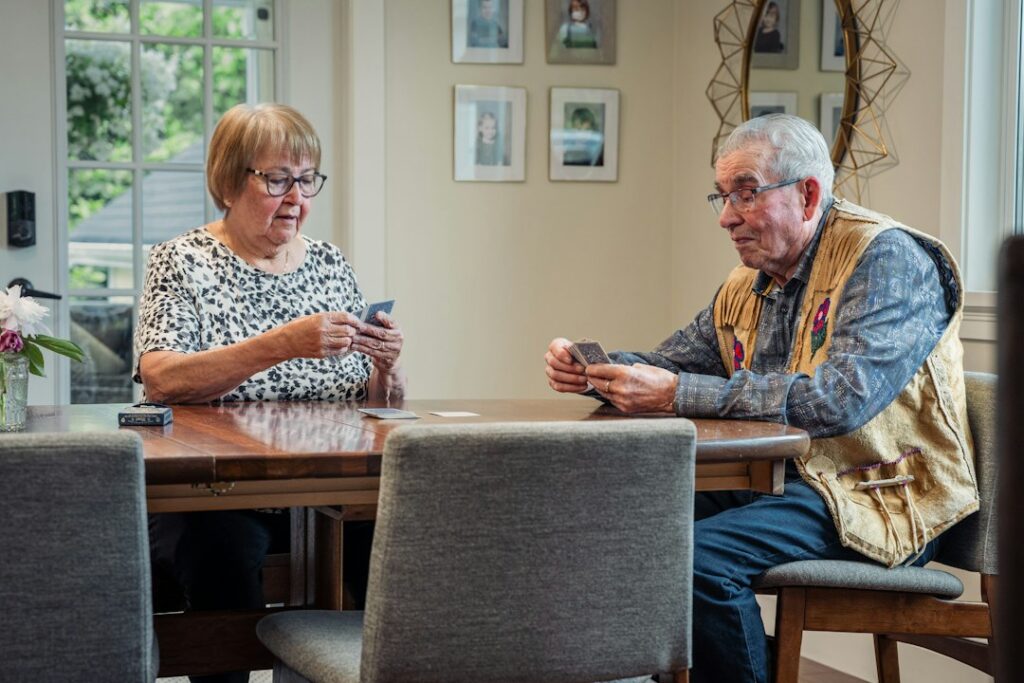
- Playing cards, board games, puzzles, or simple group games
- Helping residents write letters, organize photographs, or record family memories
- Supporting music, art, gardening, or craft programs
- Accompanying residents to supervised activities within the building
- Visiting with residents who have limited family contact
- Assisting with holiday gatherings, birthdays, or cultural events
- Helping prepare materials for discussion groups or recreational programs
- Sharing hobbies such as knitting, cooking demonstrations, photography, or storytelling
- Participating in intergenerational programs with children, students, or families
The most useful activities are often simple and consistent. A resident may value a regular conversation or weekly card game more than a large, occasional event.
Can volunteers provide personal care or medical assistance?
Usually, volunteers do not provide hands-on personal care or clinical services unless a specific responsibility is permitted, supervised, and properly authorized by the community. Bathing, toileting, transferring, medication assistance, wound care, and health assessments generally belong to trained staff.
Volunteers should not give medical advice, handle medications, respond to emergencies independently, or promise to monitor a resident’s health. If a resident appears ill, confused, injured, unusually tired, or distressed, the volunteer should notify a staff member promptly.
This boundary protects both residents and volunteers. It also prevents confusion about who is responsible for care decisions and emergency response.
How are volunteers usually trained?
Volunteer orientation commonly covers community policies, resident privacy, emergency procedures, infection prevention, communication expectations, and appropriate boundaries. Some programs also provide guidance on dementia, fall awareness, mobility limitations, hearing loss, and respectful conversation.
Training may be brief for social visiting and more detailed for activities involving groups or specialized populations. Volunteers may also need to complete screening or background-check requirements, depending on the community and the responsibilities involved.
A good orientation should explain practical questions, such as:
- Which areas are open to volunteers?
- How should concerns about a resident be reported?
- What should happen if a resident falls or becomes sick?
- Are photographs or social media posts prohibited?
- Can volunteers accept gifts?
- How should private or sensitive information be handled?
- What activities are appropriate for residents with memory loss?
Clear expectations make volunteering safer and more comfortable for everyone.
Why is companionship important for older adults?
Regular social contact can support emotional well-being, confidence, communication, and a sense of belonging. A volunteer may provide an opportunity for a resident to talk about family history, interests, work, music, books, or everyday experiences.
Companionship does not mean forcing conversation. Some residents prefer quiet activities, short visits, or simply having another person nearby. Others may enjoy extended discussions and group participation.
Volunteers should avoid treating older adults as children or assuming that age determines ability. Residents should be addressed directly, offered choices, and included in conversations about their own preferences. Asking before touching personal belongings, moving mobility equipment, or entering a private space is also essential.

How can volunteers support residents living with dementia?
Volunteers can provide calm, structured, and familiar interaction for residents living with dementia. Helpful approaches include using a gentle tone, allowing extra time for responses, focusing on the present moment, and avoiding arguments about mistaken details.
Useful activities may include looking through familiar photographs, listening to music, folding towels, sorting objects, watering plants, or discussing well-known routines. The purpose is not to test memory or correct every error. It is to support comfort, dignity, and engagement.
If a resident becomes frightened, angry, or overwhelmed, the volunteer should reduce stimulation and seek staff assistance. Volunteers should not attempt to manage serious behavioral or safety concerns alone.
What should families ask about a volunteer program?
Families considering assisted living may ask how volunteers are selected, trained, supervised, and matched with residents. It is reasonable to ask whether the program has a written role description and how concerns are handled.
Useful questions include:
- What tasks may volunteers perform, and which tasks are prohibited?
- Are volunteers trained to interact with residents who have dementia?
- How are privacy and confidentiality protected?
- Are volunteers supervised by a designated staff member?
- What happens if a volunteer cannot attend a planned visit?
- Can residents decline visits or activities?
- How does the community evaluate whether activities are suitable?
- Are family members informed if a volunteer notices a concern?
A strong program respects resident choice. Participation should not be assumed simply because a volunteer has been assigned or an activity has been scheduled.
What are the boundaries around gifts and personal relationships?
Volunteers should maintain friendly but professional relationships. Residents may offer money, jewelry, food, or other gifts, but accepting them can create ethical and emotional complications. Many communities limit or prohibit gifts, borrowing, private financial arrangements, transportation, and personal exchanges outside the program.
Volunteers should not request loans, sell items, promote causes, or become involved in a resident’s financial decisions. They should also avoid sharing private contact information unless the community specifically permits it.
These boundaries are not meant to discourage warmth. They help reduce the risk of favoritism, misunderstandings, exploitation, or unequal treatment.
How can local residents volunteer responsibly?
People in Ardmore who are interested in volunteering may have useful abilities even without specialized experience. Patience, reliability, listening skills, and respect are often more important than having a formal background in elder care.
Seasonal conditions may affect participation. Winter weather, heavy rain, heat, and transportation disruptions can make consistent scheduling difficult, so volunteers should communicate early when they cannot safely travel. Reliable attendance matters because residents may look forward to planned visits.
Before beginning, a prospective volunteer should understand the time commitment, complete required orientation, follow health and safety rules, and recognize the limits of the role. A volunteer does not need to solve every problem. Showing up consistently, listening carefully, and reporting concerns to staff can be a meaningful contribution.
